/ 4 min read
Prius Intelli SaaS Platform
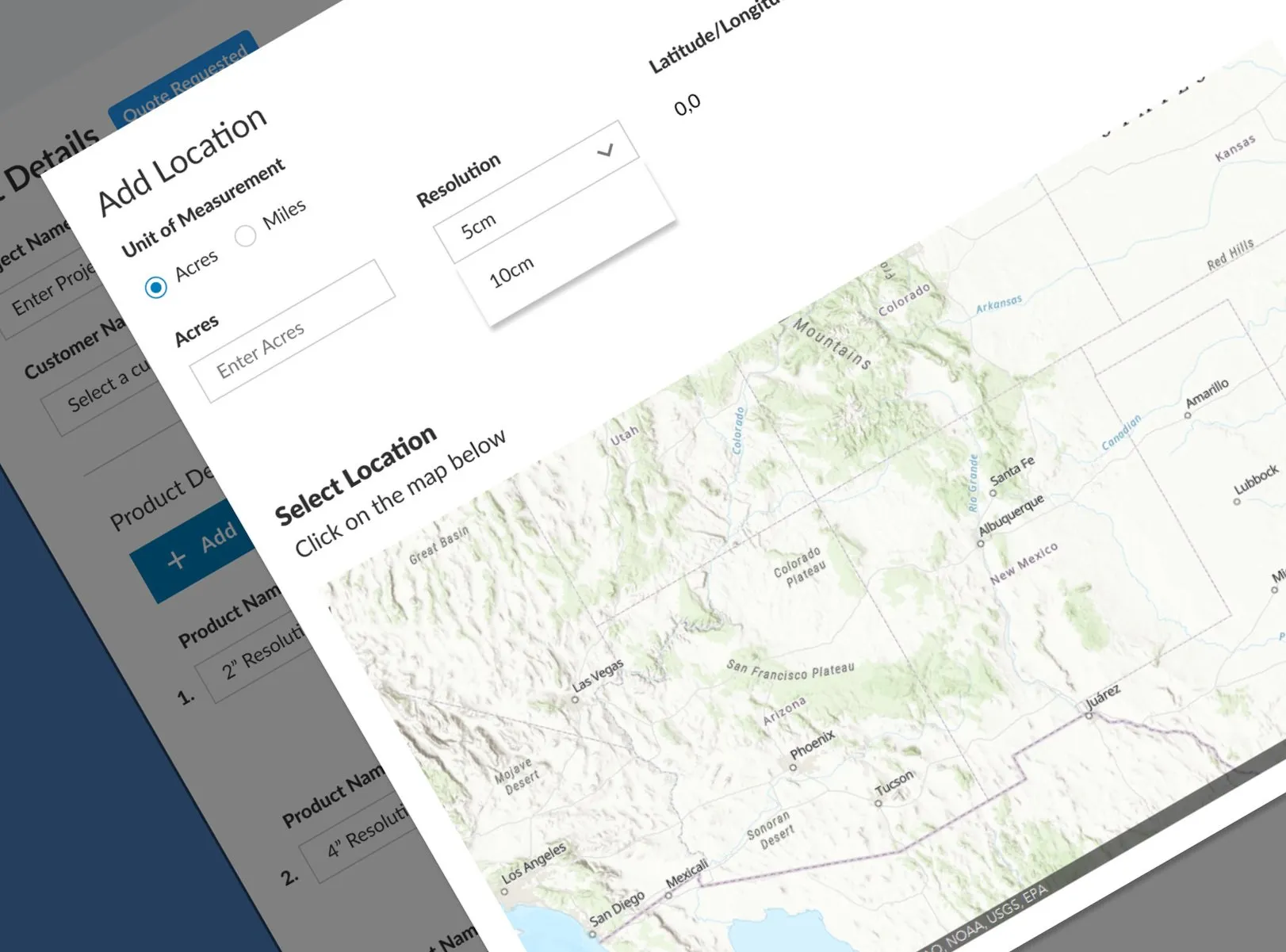
An order-management platform for an aerial-imagery company, covering customer ordering through analyst and pilot dispatch, launched as an MVP in three months.
Project overview
Company: Prius Intelli
Role: User Experience Architect, User Flows & Stories, Sketching, Wireframing, Visual Design, Prototyping
Prius Intelli is a GIS aerial imagery company that uses research-grade cameras attached to airplanes to take high-definition photos of land. As a company, they provide image production and analysis services to land owners, land developers, and cities. This was a contract project where I helped design their first software solution to help customers create orders and help internal employees manage and track projects. I worked with the founders, systems architects, and front-end developers to create user journeys, wireframes, and clickable prototypes.
Figma prototype
For the best viewing experience, click the expand icon in the top right location of the frame.
The challenge
Prius Intelli was looking for a way to quickly dispatch order requests for aerial imagery to their pilots, track order statuses, inform internal GIS analysts of order types and requests, and give customers a portal to make new orders and view their existing orders. Through this, I identified two core user personas to guide the design.
The solution
Prius Intelli’s need was a new user experience design that could satisfy two core use cases: 1) Customers who needed to create new and manage existing orders, and 2) an internal operations team that needed to manage new orders, perform analysis, and track order status between analysts and pilots. To start, we created two user personas and journeys to better understand the desired experience for each type of user.
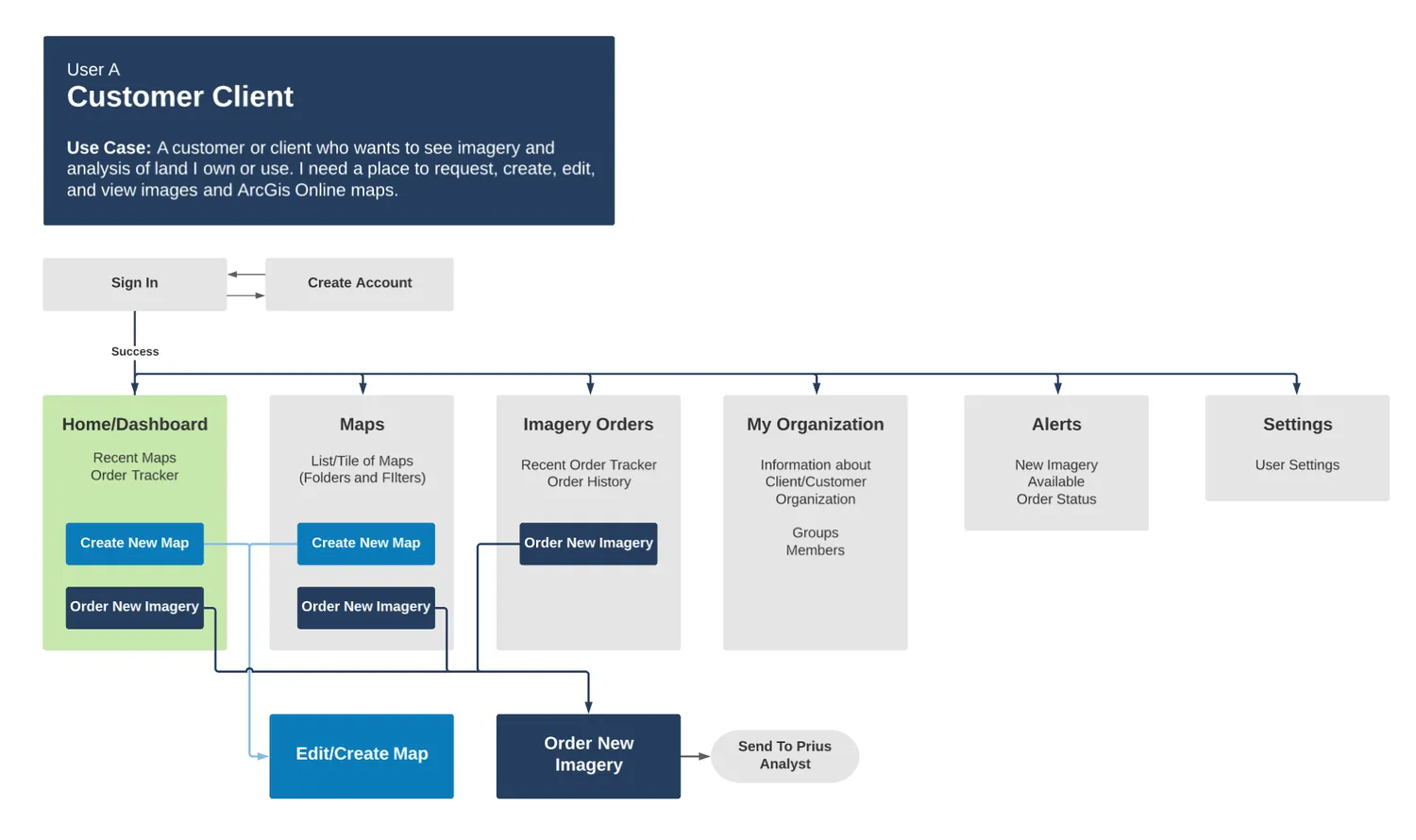
User persona A: Customer client
User A journey map
Prius Intelli’s primary user is the customer or client. Prius Intelli offers a software solution where potential customers can log in, browse imagery product offers, and request images of a custom area on the map. Many of these users will have their own office where they manage their land. They would log in to Prius Intelli and place an order right from their computer, which will then be sent to Prius Intelli where, using their proprietary tools, they will produce the imagery.
Selected high-fidelity mockups
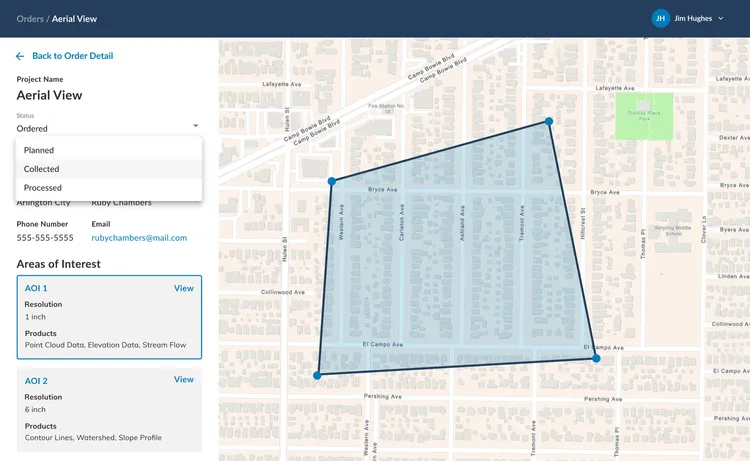 Selecting an Area of Interest (AOI) for Image Capture
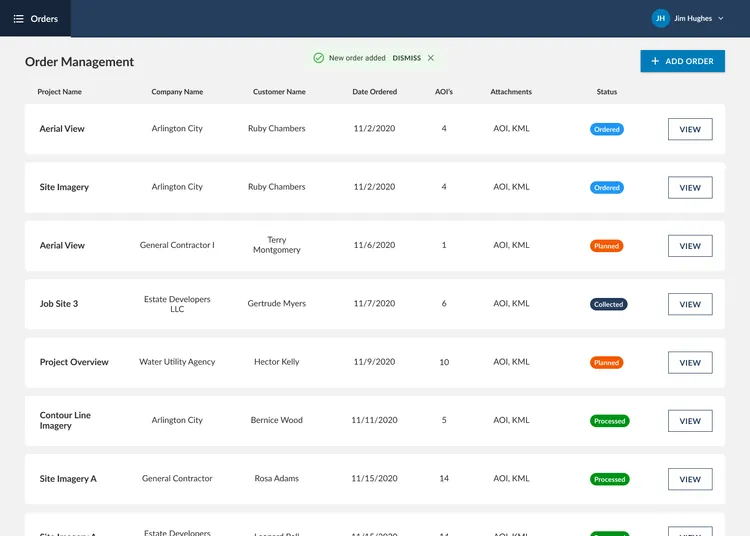 Order List Page - Successfully Submitting a New Order
User persona B: Internal operations team
Prius Intelli’s internal operations team, made up of project managers and image and map analysts, managed and maintained customer orders. They tracked order status and delivery, and coordinated internal engineers for image analysis. They needed a configurable experience where they could create and edit projects and orders, create and customize new products, and deliver imagery to customers.
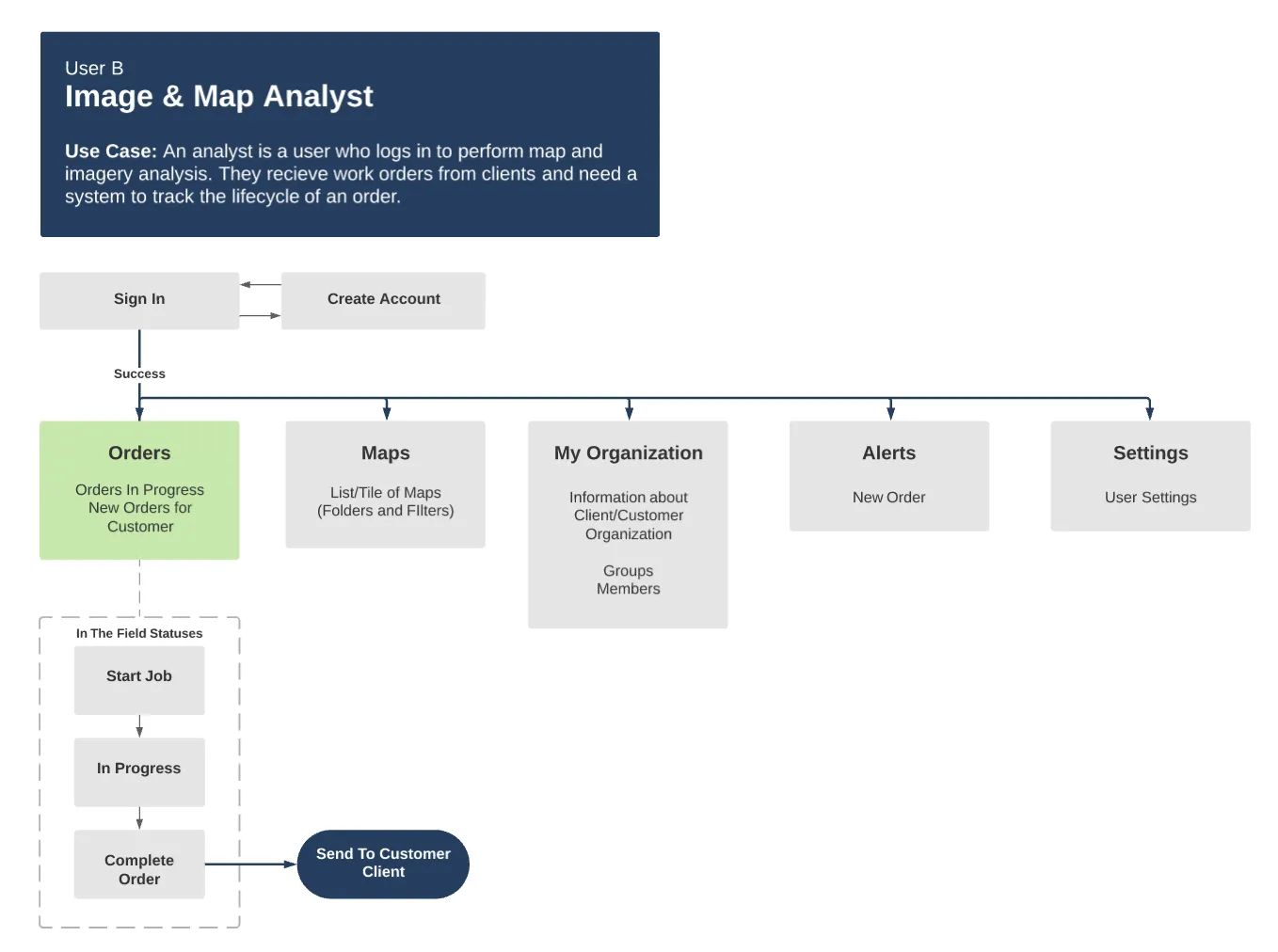
User B journey map
In understanding User B’s use case, we identified core areas this user may need to interact with and mapped them to a site map. This team works directly with images and maps, tracks order status, and manages customers and clients.
Selected high-fidelity mockups
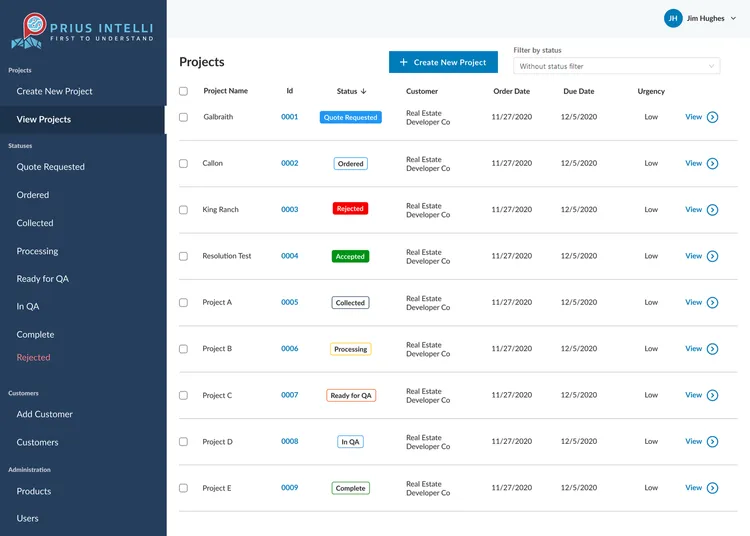 Ongoing Project List - Showing Projects, Order Statuses, and Filters
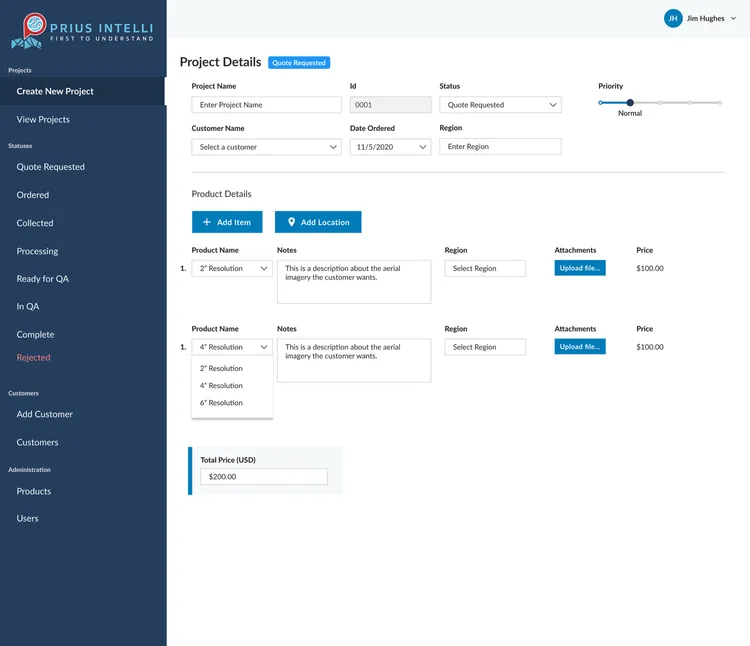 Create a New Project - Adding Project Form Details, Selecting Products, Placing Orders
Conclusion
After three months, we launched a production-ready MVP for initial customer use and discovery. From a design perspective, I provided the team with medium-fidelity mockups, screen flowcharts that showed the user experience at a high level, high-fidelity mockups for each screen, and a functioning clickable prototype to be used as a presentation aid for executives and a development aid for engineers.
Over the three months, I met with the executive team twice a week to gather feedback and review feasibility and timelines. Three times a week, I met with the engineering team to keep the build true to the design, adapt designs to technical constraints, and run acceptance testing on user flows.
Last Updated: